How to Unclog a Kitchen Sink Drain Safely in Belleville, Illinois
Grease, food debris, and soap residue slow kitchen drains gradually until water stands in the sink. This guide explains manual clearing steps, habits that reduce clogs, and when repeat clogs call for a camera check.
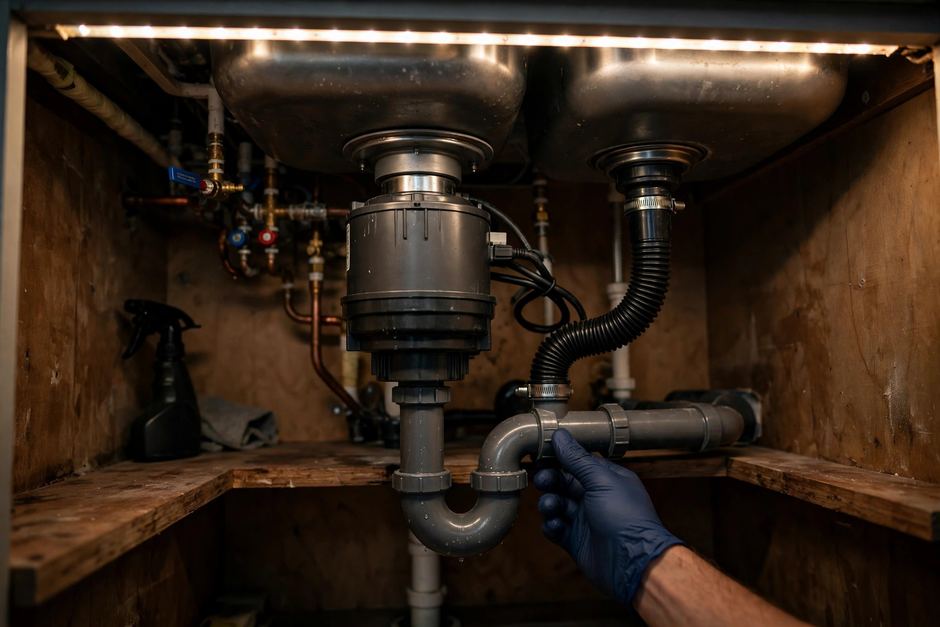
Kitchen sink drains carry grease, food particles, and soap residue every day, and buildup narrows the pipe gradually before water stands in the sink. Early slowing is the useful warning, because a drain that still moves water responds to manual steps more readily than a fully blocked line. Drain cleaning addresses clogs that manual steps cannot clear.
Plumbing work in Illinois is restricted under the Illinois Plumbing License Law (225 ILCS 320), and the homeowner exception covers single-family owner-occupant homes only. The steps here are limited to strainer clearing, plunger use, and habits at the sink. Work on traps, drain lines, or fixtures beyond those steps belongs with a plumber.
Illinois Rules for Homeowner Drain Work
Illinois restricts plumbing work under the Illinois Plumbing License Law (225 ILCS 320), with a homeowner exception that covers single-family owner-occupant homes only. That exception does not extend to rental homes, multi-family buildings, or commercial property. Homeowners working within the exception still need work to meet the Illinois Plumbing Code, and work beyond the exception belongs with a plumber.
The boundary in this guide is practical. Clearing a strainer, using a plunger, and changing habits at the sink sit on the homeowner side. Removing a trap, opening a drain line, or working on a fixture connection sits on the plumber side. When a clog resists manual steps, the next step is a call rather than deeper disassembly.
What Slows a Kitchen Sink Drain
Grease is the most common kitchen drain problem in everyday use, because liquid grease cools and coats pipe walls as it moves away from the sink. Food particles catch on that coating, and soap residue adds a further layer, narrowing the opening a little at a time. The drain slows gradually, then holds standing water once the narrowing passes a tipping point.
Disposal use shapes the pattern as well. A disposal grinds food into small particles, but those particles still travel through the same drain line and can settle where flow slows. Fibrous material, starchy foods, and grease poured down the drain add load that the line clears slowly. Habits at the sink matter as much as any clearing step after the fact.
Manual Steps That Avoid Harsh Chemicals
Start with the strainer and any visible debris at the drain opening, removing material by hand before trying the plunger. A sink plunger, pressed firmly over the drain with enough water in the basin to cover the cup, moves water back and forth through the clog. Steady plunging with a sealed cup does more than forceful thrusts that break the seal and splash water.
This guide does not recommend chemical drain cleaners. Chemical products can damage pipes and fixtures, create hazards when they sit in standing water, and complicate later work by a plumber who must handle the treated water. Hot water from the tap, run after manual clearing, helps move loosened residue without adding chemicals to the line.
- Clear the strainer and visible debris first
- Use a sink plunger with a sealed cup
- Run hot tap water after manual clearing
Why Repeat Clogs Need a Camera Check
A clog that returns after clearing points to a cause beyond the sink trap, such as buildup further down the line, a partial obstruction, or root intrusion where the line runs outdoors. Clearing the same clog repeatedly treats the symptom while the underlying cause keeps narrowing the pipe. A camera inspection shows the inside of the line and names the cause before further work is chosen.
Sewer camera inspection records what the line actually contains, including scale, grease coating, offsets, and root entry points. That evidence separates a line that needs cleaning from a line that needs repair, and it prevents paying for repeated clearing when the cause sits beyond reach of a plunger. Repeat clogs are the clearest signal that seeing inside the line comes first.
Grease and Disposal Habits That Reduce Clogs
Keeping grease out of the drain is the single habit with the largest effect. Wiping pans with a paper towel before washing, pouring cooled grease into a container for the trash, and scraping plates into the trash keep the heaviest clog material out of the line. Small amounts of grease from washing still enter the drain, but the bulk stays out.
Disposal habits help as well. Running cold tap water before, during, and after disposal use carries ground particles further down the line, and feeding material gradually avoids overloading the chamber. Garbage disposal repair becomes relevant when the unit jams, hums without grinding, or leaks, rather than when the drain alone slows.
- Wipe grease from pans before washing
- Scrape plates into the trash
- Run tap water with disposal use
When to Call for Drain Help
Call for help when manual steps do not restore flow, when clogs return after clearing, when more than one fixture drains slowly, or when water backs up into the sink from elsewhere. Plumbing work in Illinois is restricted under the Illinois Plumbing License Law (225 ILCS 320), and the homeowner exception covers single-family owner-occupant homes only. Trap and drain line work belongs with a plumber.
Before calling, note how long the slowing has lasted, whether other fixtures are affected, and whether chemical products were used in the drain. That last detail matters for safety, because a plumber handling treated water needs to know what sits in the line. Standing water that carries sewage odor points to a sewer issue rather than a sink clog.
Frequently Asked Questions
How should a sink plunger be used?
Use a sink plunger with the cup pressed firmly over the drain and enough water in the basin to cover the cup. Steady plunging with a sealed cup moves water back and forth through the clog. Forceful thrusts that break the seal splash water without moving the obstruction, so seal and rhythm matter more than force.
Are chemical drain cleaners a safe option?
This guide does not recommend chemical drain cleaners and does not present them as safe. Chemical products can damage pipes and fixtures, create hazards in standing water, and complicate later work by a plumber handling treated water. Manual clearing, followed by hot tap water, avoids adding chemicals to the line.
Why does the same clog keep returning?
A returning clog points to a cause beyond the sink trap, such as buildup further down the line, a partial obstruction, or root intrusion outdoors. Repeated clearing treats the symptom while the cause keeps narrowing the pipe. A camera inspection shows the inside of the line and names the cause before further work is chosen.
Does grease really clog drains if it goes down hot?
Grease poured down hot cools as it travels and coats pipe walls, where food particles and soap residue catch and build up. The coating narrows the opening gradually, so the drain slows over time rather than blocking at once. Wiping pans and scraping plates keep the bulk of grease out of the line.
When does a slow sink mean a larger drain problem?
More than one fixture draining slowly, water backing up from elsewhere, gurgling at other fixtures, and sewage odor all point beyond a single sink clog. Those patterns suggest a partial clog in a shared line or a main line issue. A camera check and plumber assessment fit those patterns better than repeated plunging.
Get Help With a Clogged Kitchen Sink in Belleville
For help with a clogged kitchen sink in Belleville, Illinois, call Hinkle Plumbing Company at (618) 677-6556 during office hours, Monday through Friday, 8:00 AM to 4:30 PM. The office at 1610 W Main St, Belleville, IL 62220, is closed Saturday and Sunday. Note how long the drain has slowed and whether other fixtures are affected.
Mention whether any chemical products were used in the drain, since that detail affects how standing water is handled. Outside office hours, avoiding further water use at the affected sink limits backup while waiting. A clog that returns after clearing deserves a camera check rather than another round of plunging.