Tankless vs. Tank Water Heater Cost in Belleville, Illinois
Tank heaters store heated water, while tankless units heat water as it is used. This guide compares how each type works, what affects replacement scope, and what conversion involves.
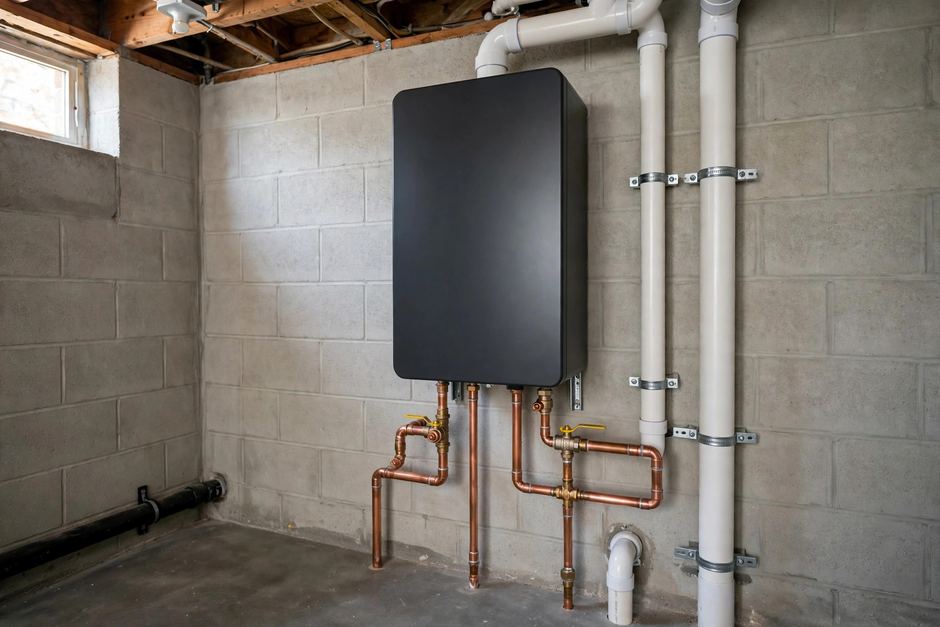
Choosing between a tank heater and a tankless unit is a comparison of two different ways to heat water, not a choice between two versions of the same machine. Tank heaters store a volume of heated water, while tankless units heat water as fixtures call for it. Water heater installation scope differs for each type, and conversion from one type to the other adds scope beyond a like-for-like swap.
This guide compares the two types by how they work, what affects scope, and what conversion involves. No prices and no ranges are stated, and no repair scope claim is made for either type. The comparison helps homeowners frame questions for a plumber in Belleville, Illinois, rather than deciding the choice alone.
How a Tank Heater Works
A tank heater stores heated water in an insulated tank, holding it ready for use at any fixture. A burner or heating elements raise stored water to temperature, a thermostat senses when heating is needed, and the tank refills and reheats after hot water is drawn. Stored volume sets how much hot water is available before reheating must catch up.
Tank heaters suit homes where hot water use arrives in batches, since stored water covers a shower, a laundry load, or a dishwasher cycle from the tank. Recovery time, the period needed to reheat a drawn-down tank, shapes how closely uses can follow one another. Tank size, heating capacity, and household use patterns together decide whether stored volume fits the home.
How a Tankless Unit Works
A tankless unit heats water as it flows through the unit, with no stored volume waiting between uses. When a fixture opens, flow activates heating, and water leaves the unit heated for direct use. When fixtures close, heating stops, so no energy holds a stored tank at temperature between uses in the same way.
Tankless capacity follows combined demand, meaning the fixtures running at once decide whether heated flow keeps pace. A single shower differs from a shower, laundry, and dishwasher running together, and colder incoming water in winter asks more heating from the unit. Sizing must reflect the home's combined-use pattern, not a single fixture alone.
What Affects Scope for a Tank Replacement
A like-for-like tank replacement swaps a tank heater for a tank heater of similar size and fuel, keeping venting, gas or electrical supply, and water connections largely in place. Scope grows when venting needs correction, when an expansion tank is added, when connections need rerouting, or when code corrections surface during the swap. Each addition belongs in the written scope.
The City of Belleville requires a permit before plumbing work begins (§152.05(A)); direct replacement of a toilet, sink, faucet, or other appliance is exempt, except hot water heaters require an electrical or gas permit (§152.05(B)(3)). Tank replacement therefore carries permit framing from the start. Haul-away of the old tank and disposal handling also belong in the scope discussion.
Conversion Considerations for Tankless Units
Conversion from tank to tankless adds scope beyond the unit itself. Gas models may need a larger gas supply line, new venting suited to the unit, and a condensate drain where condensing models produce acidic condensate. Electric models may need electrical capacity assessment, since tankless heating draws heavily during flow. Each element needs assessment for the home in question.
Mineral scale attention differs as well, since tankless units heat water through narrow passages where scale collects. Tankless water heater services discussions should include descaling attention and water conditions in the home. Colder incoming water in winter also shapes sizing, since the unit must raise water temperature further during cold periods.
- Gas supply and venting assessment
- Condensate drain where required
- Electrical capacity for electric models
- Scale attention for narrow passages
Living With Each Type
Daily life differs by type. Tank heaters deliver hot water from storage, with recovery pauses after heavy use, while tankless units deliver heated water on demand, with flow rate shaping how many fixtures can run together. Space differs as well, since tankless units mount on a wall and open up floor space that a tank occupies. Neither pattern suits every household, and use patterns decide the fit.
Attention differs by type as well. Tanks need sediment and anode attention over time, while tankless units need scale attention through narrow passages. Ask whether repair service is offered for the type installed, since water heater repair scope varies by type and this guide makes no repair scope claim for either. Service scope questions belong in the decision discussion.
Deciding Questions to Ask
Ask how household hot water use runs through the day, which fixtures run together, what fuel and venting the home holds, and what conversion scope a tankless change would add. Ask what sizing basis supports the recommendation, what permit framing applies, and what scale attention each type needs. Water heater work is restricted plumbing work under the Illinois Plumbing License Law (225 ILCS 320), with a homeowner exception for single-family owner-occupant homes only.
Ask also what happens if the chosen type proves undersized for combined use, and how service scope covers the installed type. Written scope should name the unit type, sizing basis, venting and supply work, permit handling, and restoration. A comparison grounded in household use patterns serves the decision better than a comparison grounded in type alone.
Frequently Asked Questions
How do tank and tankless heaters differ?
Tank heaters store heated water in an insulated tank and hold it ready, reheating after draws. Tankless units heat water as it flows through, with no stored volume, activating heating when fixtures open. Stored volume sets tank availability, while combined fixture demand sets tankless capacity. The two types heat water in fundamentally different ways.
What does tank-to-tankless conversion involve?
Conversion adds scope beyond the unit, including gas supply and venting assessment, a condensate drain where condensing models require one, electrical capacity assessment for electric models, and scale attention for narrow passages. Sizing must reflect combined fixture demand and colder incoming water in winter. Each element needs assessment for the home.
Do tankless units need different venting?
Tankless units need venting suited to the unit type and fuel, which often differs from existing tank heater venting. Gas models carry specific venting requirements, and condensing models add condensate handling. Venting assessment belongs in conversion scope from the start, with permit framing for hot water heaters applying to the work.
How does scale affect each heater type?
Scale and sediment settle in tanks and coat heating surfaces, while scale collects in the narrow passages of tankless units where water heats on flow. Both types need scale attention, though the attention differs in form. Water conditions in the home shape how often attention is needed, and no schedule is stated here.
How is tankless sizing decided?
Tankless sizing follows combined demand, meaning the fixtures running at once, together with incoming water temperature across seasons. A single shower differs from several fixtures running together, and colder winter incoming water asks more heating. Sizing must reflect the home's combined-use pattern rather than a single fixture alone.
Get Help Comparing Tank and Tankless Heaters in Belleville
For help comparing tank and tankless water heaters in Belleville, Illinois, call Hinkle Plumbing Company at (618) 677-6556 during office hours, Monday through Friday, 8:00 AM to 4:30 PM. The office at 1610 W Main St, Belleville, IL 62220, is closed Saturday and Sunday. Describe household hot water patterns and current heater type.
Ask about sizing basis, venting and supply scope, permit framing, and service scope for the type under consideration. This guide states no prices and makes no repair scope claim for either type. Written scope should name each element before a decision is made.