Why Is My Faucet Leaking at the Base in Belleville, Illinois
A leak at the faucet base appears where the faucet meets the sink or counter. This guide explains seal and cartridge causes, what to observe, and when repair or replacement fits.
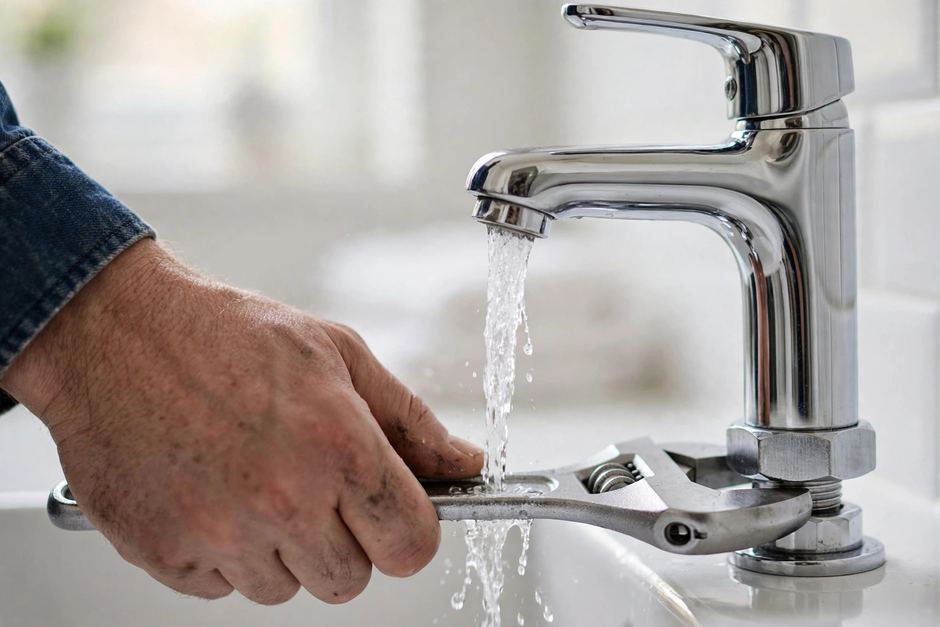
Water pooling around the base of a faucet usually starts inside the faucet body, where seals and cartridges control flow and direction. The leak may show only while the faucet runs, or it may persist after shutoff, and that timing narrows the cause. Faucet repair addresses seal and cartridge faults before they reach cabinets and flooring below.
Kitchen, bathroom, and utility faucets share the same sealing idea with different shapes and use patterns. Kitchen faucets move more and carry sprayer connections, while bathroom faucets see shorter, frequent use. Observing when the leak appears, and whether water shows below the sink, gives the plumber a clear starting point.
Where Base Leaks Start
The base of a faucet is where the faucet body meets the sink or counter, sealed by gaskets and held by mounting hardware below. Water reaching the base usually travels from inside the faucet body, past a worn seal or cartridge, and emerges at the joint. The visible pool at the base is the exit point, not necessarily the failing part.
Seals inside the faucet wear with use, stiffen with age, and roughen where mineral deposits collect. Cartridges, which mix and direct water in many modern faucets, develop wear at sealing surfaces that lets water pass where it should not. Mounting hardware that loosens over time can also let the faucet shift, opening a path for water at the base.
Kitchen, Bathroom, and Utility Differences
Kitchen faucets work hardest, with frequent use, swivel movement, and sprayer or side-spray connections that add joints and hoses. Base leaks at kitchen faucets often pair with sprayer or hose faults, and water may show below the sink before it pools visibly at the base. The cabinet below a kitchen sink deserves a look whenever base water appears.
Bathroom faucets see shorter, frequent use with less movement, so base leaks there more often trace to cartridge or seal wear alone. Utility faucets face heavier use and rougher handling, with mounting and connection faults more common. Faucet type shapes the likely cause, though observation of timing and location still decides the diagnosis.
What to Observe Before Acting
Timing is the first observation. A leak that appears only while the faucet runs points to seals under pressure during flow, while a leak that persists after shutoff points to a seal that no longer holds at rest. A leak that appears when the sprayer runs points to sprayer connections rather than the faucet body itself.
Location is the second observation. Water at the base alone differs from water below the sink, which suggests a connection, supply, or drain fault rather than a faucet seal. Handle feel adds a third clue, since a stiff, loose, or gritty handle often accompanies cartridge wear. Noting all three observations before acting narrows the fault considerably.
- Whether the leak shows only while running
- Whether water appears below the sink
- How the handle feels during use
Seal and Cartridge Faults Explained
Seals fail gradually. Rubber and fiber sealing surfaces compress, stiffen, and develop grooves where moving parts pass, letting water slip through gaps too small to see. Mineral deposits roughen sealing surfaces further, and a seal that held for years can start passing water as deposits and wear combine. Replacement seals must match the faucet model to seat correctly.
Cartridges fail as sealing surfaces wear and internal passages collect deposits. Symptoms include dripping at the spout, leaking at the base, stiff handle movement, and difficulty finding a stable temperature blend. Cartridge replacement requires a matching part, and forcing a mismatched cartridge can damage the faucet body. Matching matters more than speed of repair in every cartridge case.
Repair or Replacement Considerations
Repair fits when the faucet body remains sound, matching seals or cartridges are available, and the fault sits in a replaceable part. Replacement fits when the body corrodes, matching parts are unavailable, finish damage accompanies internal wear, or faults return after repair. Age alone does not decide the choice, since a well-built faucet can outlast several seal changes.
Water below the sink changes the discussion, because supply and drain connections sit outside the faucet itself. Leak repair covers connection and supply faults found below the sink, while faucet work addresses the body above. The City permit framing for direct faucet replacement is stated in the next section, since replacement decisions carry that context.
When to Call for Faucet Help
Call for help when base leaking persists, when water appears below the sink, when the handle binds or loosens, when matching parts prove hard to identify, or when shutoff valves resist turning. Plumbing work in Illinois is restricted under the Illinois Plumbing License Law (225 ILCS 320), and the homeowner exception covers single-family owner-occupant homes only. Work beyond observation belongs with a plumber.
The City of Belleville requires a permit before plumbing work begins (§152.05(A)); direct replacement of a toilet, sink, faucet, or other appliance is exempt, except hot water heaters require an electrical or gas permit (§152.05(B)(3)). Plumbing repairs for faucet replacement fall under that direct-replacement exemption as written. Checking with the City settles any unclear case.
Frequently Asked Questions
How does a base leak differ from a spout drip?
A base leak pools where the faucet meets the sink or counter, while a spout drip falls from the outlet. Base leaks usually trace to seals, cartridges, or mounting paths inside the faucet body. Spout drips trace to valve or cartridge sealing at the outlet. Location and timing together separate the two faults.
What role do seals play at the faucet base?
Seals inside the faucet body keep water on its intended path and out of joints that open toward the base. Rubber and fiber sealing surfaces compress and stiffen with age, while mineral deposits roughen them further. A worn seal lets water slip through gaps too small to see, emerging as a pool at the base.
What is a faucet cartridge?
A cartridge is the internal component that mixes and directs water in many modern faucets, with sealing surfaces that wear over time. Cartridge faults show as dripping, base leaking, stiff handle movement, and unstable temperature blend. Replacement cartridges must match the faucet model to seat correctly and seal.
Why does the leak show only while the faucet runs?
A leak that shows only during flow points to seals under pressure while water moves, with the seal holding at rest. A leak that persists after shutoff points to a seal that no longer holds without pressure. Timing narrows the cause, and sprayer-only leaking points to sprayer connections instead.
Does replacing a faucet need a permit in Belleville?
The City of Belleville requires a permit before plumbing work begins, with direct replacement of a toilet, sink, faucet, or other appliance exempt, except hot water heaters require an electrical or gas permit. A direct faucet replacement falls under that exemption as written. Checking with the City settles any unclear case.
Get Help With a Faucet Leaking at the Base in Belleville
For help with a faucet leaking at the base in Belleville, Illinois, call Hinkle Plumbing Company at (618) 677-6556 during office hours, Monday through Friday, 8:00 AM to 4:30 PM. The office at 1610 W Main St, Belleville, IL 62220, is closed Saturday and Sunday. Note whether the leak shows only while running.
Water below the sink, a binding handle, or shutoff valves that resist turning all point beyond simple observation. Shutting off water at the fixture shutoffs, where valves turn without forcing, limits damage while help is arranged. Outside office hours, those shutoffs are the holding step until office hours return.